

Best Places to Visit in Vietnam – Top Spots to Add to Your Itinerary
You may think you know Vietnam, but this beautiful country has plenty of surprises waiting for you.
You may have seen the famous limestone cliffs of Ha Long Bay, the peaceful temples, and the colorful lanterns of Hoi An. But Vietnam feels different when you experience it for yourself. It is the lively buzz of motorbikes filling the streets, the comforting smell of fresh pho in the morning and the warmth of a small café where you can sit and watch the world go by.
And then there is the joy of discovering just how much delicious food and unforgettable experiences you can enjoy without spending a fortune.
So, where should you go first? From bustling cities and charming old towns to beautiful beaches and dramatic landscapes, this blog is about the best places to visit in Vietnam that offers something special for every kind of traveler.
And do you know the secret that keeps surprising visitors?
Vietnam is genuinely affordable.
This isn’t a destination where you’re stretching your budget thin or compromising on experiences. This is a place where your money goes further than you imagined possible. You can stay in charming boutique hotels, eat at excellent restaurants, take cooking classes and explore multiple regions without breaking the bank.
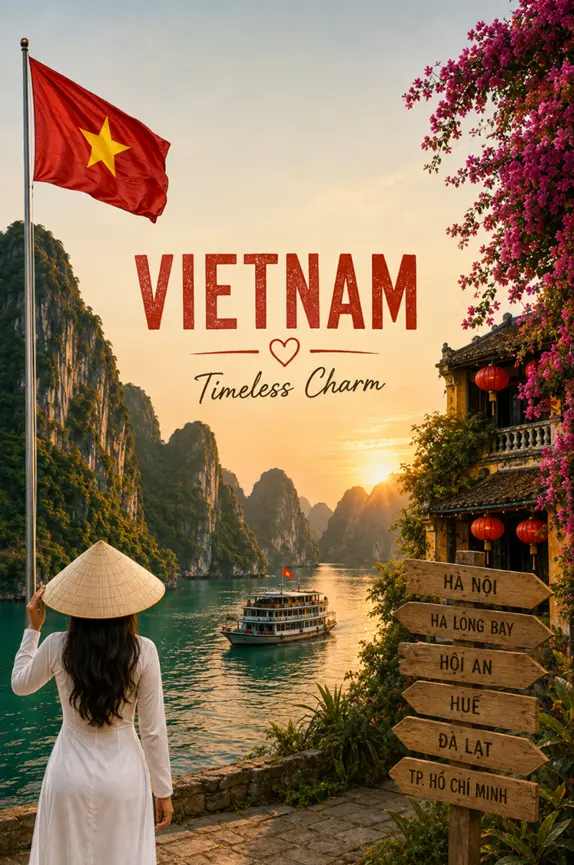
This guide walks you through when to go to Vietnam and how to build a trip that actually fits who you are, not just what’s trending on social media.
Why Vietnam Destinations Stand Out Right Now?
Travel to Southeast Asia has exploded over the past decade. But Vietnam remains one of the few places where you can still feel genuinely off the beaten path, even when you’re visiting famous attractions.
Partly this is geography. Vietnam stretches nearly 1,000 miles down the coast of Southeast Asia, and it’s narrow never more than about 350 miles wide. This means you can move between completely different landscapes and experiences relatively quickly.
You can be exploring the chaos of Hanoi’s Old Quarter in the morning and watching the sun set over limestone cliffs by evening.
The Best Time to Go to Vietnam
Before diving into specific destinations, timing matters. Vietnam’s geography means different regions have different ideal seasons.
Generally, October through April is the sweet spot for most of Vietnam. Because:
- Weather is mild
- Humidity is lower
- Rainfall is minimal
This is peak season, which means more tourists and higher prices though prices remain very reasonable compared to most other destinations.
May through September is Vietnam’s rainy season. This doesn’t mean it rains constantly. It means afternoon downpours are common. The landscape is lush and green.
Tourist infrastructure quiets down. Prices drop. If you don’t mind occasional rain and you’re flexible with activities, this can be a rewarding time to visit.
Best Places to Visit in Vietnam
Let’s go through all the famous tourists spots one-by-one:
1. Hanoi
Hanoi isn’t like other capital cities. It’s chaotic in a way that somehow makes sense once you’re standing in the middle of it.
The Old Quarter is the heart of Hanoi. Narrow streets, each traditionally devoted to a single trade, still follow these ancient patterns. Hundreds of years of history are compressed into a few square blocks. Motorbikes, bicycles, pedestrians, and street vendors all occupy the same space, creating an organized chaos that somehow functions.
Stay a few days and the rhythm becomes clear. Coffee culture dominates the mornings. Hanoi coffee served slowly over sweetened condensed milk, sipped in tiny cups is a meditation. Street vendors set up for breakfast. The best pho (beef noodle soup) happens between 6 and 8 AM. Miss this window and you’ve missed something essential about Hanoi.
Beyond the Old Quarter, Hanoi rewards slow exploration. The Temple of Literature is peaceful and philosophical. Hoan Kiem Lake offers space to breathe. The Ho Tay (West Lake) neighborhoods feel like a different city entirely, with leafy streets and local cafés where foreigners are rare.
Best time to visit Hanoi: November-February (cool and dry)
2. Ha Long Bay
Ha Long Bay is Vietnam’s most photographed destination. Thousands of limestone karsts rise dramatically from the Gulf of Tonkin, creating a landscape that feels prehistoric. UNESCO World Heritage site status is deserved.
The classic experience is a 2-3-day cruise. This is where most travelers spend their time. You float past the dramatic rock formations, visit caves, stop for swimming and kayaking. Sunrise and sunset are genuinely spectacular.
The issue is that thousands of people have the same idea, which means the main bay can feel like a floating tourist park.
3. Ninh Binh:
Two hours south of Hanoi, Ninh Binh offers similar limestone scenery with a completely different feel. This is where Vietnam destinations start to feel like you’ve discovered something yourself rather than joined a tour group.
The landscape is stunning limestone peaks, river valleys, rice paddies, and caves create a patchwork that’s often compared to Ha Long Bay but feels less touristy. You navigate by small rowboat through cave systems and scenic valleys. Local farmers work the fields. The pace is slower.
Tam Coc (Three Caves) is the main attraction, and it’s genuinely worth visiting. A boat ride through dramatic scenery, caves, and past local villages gives you a sense of how people actually live in this landscape.
Ninh Binh also works better as a day trip or overnight stop rather than a multi-day destination. This actually works in its favor you get the experience without the hotel-crowding that mass tourism sometimes creates.
4. Hoi An
Hoi An is what happens when a 400-year-old trading port decides to preserve itself. Lantern-lit streets, ancient wooden buildings, tailor shops, silk shops, and restaurants create a landscape that feels frozen in time except it’s genuinely alive with people, actual life, not museum recreation.
- Walk through Hoi An at sunset and you’ll understand why it’s so beloved. The light is golden. Lanterns glow. The river reflects everything. It’s photogenic without feeling fake.
- The beaches near Hoi An (Cua Dai Beach, An Bang Beach) are pleasant rather than spectacular, but they’re perfect for an afternoon.
- Stay 2-3 nights minimum. One night leaves you feeling rushed. Three nights lets you experience Hoi An’s actual character rather than just its photograph.
5. Da Nang
Da Nang is Vietnam’s modern coastal city. Better beaches than Hoi An, more contemporary infrastructure, a sense of a city actually building itself rather than preserving itself.
Da Nang also offers good food culture, pleasant beaches (China Beach, Non Nuoc Beach), and a lighter tourism infrastructure compared to Hoi An.
6. Hue
Hue sits at the heart of Vietnamese history. It was the imperial capital. The Citadel (walled imperial palace) is massive and atmospheric. The Perfume River winds through the city.
Hue is less touristy than Hoi An or Da Nang. This is its secret. You get genuine cultural depth without the Instagram-photo crowds.
Many travelers skip Hue because it’s not as “photogenic” as Hoi An or as famous as Ha Long Bay. This is a mistake. Hue rewards genuine cultural curiosity. If you want to understand Vietnam, spending 2-3 nights in Hue matters more than many other destinations.
7. Mekong Delta
The Mekong Delta is where Vietnam feeds itself. Waterways, rice paddies, fruit orchards and fishing villages create a landscape that’s agricultural, working and real.
Most travelers experience the Mekong as a day tour or overnight trip from Ho Chi Minh City. You navigate by small boat through villages and waterways, visit local markets, eat fresh tropical fruit picked seconds before you taste it, and see how life actually works in rural Vietnam.
8. Phu Quoc
This island off Vietnam’s south coast was sleepy until recently, but it’s developed into a legitimate beach destination while retaining local character. The beaches are beautiful. The water is warm. The seafood is exceptional. The vibe is relaxed without being touristy.
Phu Quoc works best as a final stop after visiting other Vietnam destinations. You’ve seen enough, now rest.
Experience Vietnamese Food
Vietnam’s food deserves its own section because dining in Vietnam is actually an experience, not just a necessity.
Pho (beef noodle soup) is iconic but just the beginning.
Banh mi sandwiches are perfect.
Banh xeo (sizzling crepes) are addictive.
Summer rolls, spring rolls, fish cakes, grilled meats and regional specialties fill the landscape.
What makes Vietnamese food special:
- Freshness: Ingredients are markets daily or twice-daily. Taste the difference.
- Complexity: Flavors layer—sweet, sour, salty, spicy all present, creating harmony.
- Affordability: Genuinely excellent meals cost $2-5 at street level, $8-15 at restaurants.
- Accessibility: Food is social. You eat where locals eat. Barriers dissolve.
Street food tours in Hanoi, Ho Chi Minh City, or Da Nang are excellent introductions if you’re nervous about street-level eating alone. Guides handle ordering, answer questions, and ease you into confidence.
Is 10 Days Enough for Vietnam? Building Your Itinerary
Yes. Ten days is genuinely enough to experience Vietnam meaningfully.
10-Day Sample Itinerary:
- Days 1-2: Hanoi – Arrive, explore Old Quarter, adjust to Vietnam’s rhythm
- Days 3-4: Ninh Binh or Ha Long Bay – Choose your limestone experience (Ninh Binh suggested for first-timers)
- Day 5: Travel Day – Journey south toward central Vietnam
- Days 6-7: Hoi An – Soak in atmosphere, cooking class, tailoring
- Day 8: Da Nang – Day trip for beaches and My Son temples or travel further
- Days 9-10: Phu Quoc or Mekong Delta – Beach relaxation or river delta exploration based on preference
Best Time to Go to Vietnam, Visas and Transportation
Best time to visit Vietnam: October-April (ideal weather across the country)
Visas: Most Western passport holders can obtain visas on arrival or online. Check current requirements for your nationality.
Getting around:
- Hanoi to Ninh Binh: Bus (2 hours, $3-5) or hired driver
- Central Vietnam: Buses or domestic flights connect Hanoi → Da Nang → Ho Chi Minh City
- Domestic flights: Surprisingly affordable ($20-60 for major routes)
- Grab app: Excellent for taxis and motorbike taxis (Grab Bike)
What to pack:
- Light, breathable clothing
- Waterproof jacket (rainy season)
- Good walking shoes
- Sunscreen
- Hat/sunglasses
- Modest clothes for temples
Final Thoughts: Vietnam Destinations That Matter
Where to go in Vietnam depends on what calls to you. But whichever Vietnam destinations you choose, you’ll discover something essential: Vietnam isn’t just a checklist of famous places. It’s a rhythm, a philosophy, a way of approaching life that’s different from what most travelers experience.
The best places to visit in Vietnam aren’t ranked by Instagram photos or guidebook stars. They’re the places where you slow down, pay attention, eat something unexpected, have a conversation with a stranger and realize that travel isn’t really about the destination, it’s about becoming someone different through the journey.
Ready to plan your Vietnam journey? Signature Trips creates personalized Vietnam travel itineraries that match your interests, pace and budget.
Vietnam is a wonderful choice, but if Europe is calling, our guide to Portugal vs Spain: Which Is Better to Visit in October 2026? can help you choose between two popular destinations.
FAQs
What is the best time to go to Vietnam?
November through January offers the best weather across the entire country cool, dry, and comfortable. October through April works for most of Vietnam.
Is Vietnam cheap and affordable?
Yes. Budget travelers spend $20-35/day, mid-range travelers $40-70/day. Quality accommodation, food, and experiences are genuinely inexpensive without sacrificing quality.
Is Ha Long Bay worth visiting?
Absolutely. The limestone scenery is spectacular and UNESCO-recognized. Book smaller boats and shoulder-season timing to avoid the worst crowds.
What’s better: Ha Long Bay or Ninh Binh?
Ha Long Bay is more dramatic and famous. Ninh Binh is more authentic and less touristy. Many travelers visit both. For first-timers, Ninh Binh often provides better value.
How many days should I spend in Hanoi?
2-3 days minimum. This gives you time to explore the Old Quarter, acclimate to Vietnam’s rhythm, and experience pho culture.
Is Hoi An worth visiting?
Yes. The atmospheric old town is genuinely special. Spend 2-3 nights to experience cooking classes, tailoring, and local restaurants beyond the main square.
What can I do in the Mekong Delta?
Visit floating markets, explore villages by boat, eat fresh tropical fruit, tour bee farms and noodle factories, and experience how people actually live in rural Vietnam. Day tours or overnight trips are available.
Is Phu Quoc worth visiting?
Yes if you want beach relaxation after sightseeing. The island offers good value, excellent seafood, and diving opportunities.
How do I get around Vietnam?
Buses connect most cities affordably. Domestic flights link major hubs ($20-60). Grab app works like Uber for taxis and motorbike transport.
What should I eat in Vietnam?
Pho, banh mi sandwiches, banh xeo crepes, summer rolls, spring rolls, and regional specialties. Eat where locals eat, especially street vendors.
Is the food in Vietnam safe?
Street food is generally very safe, especially high-turnover vendors. Avoid dishes that have been sitting. Drink bottled water. Most travelers have no issues.
How much does a Vietnam trip cost?
A 10-day trip costs $200-700+ depending on your accommodation and activity choices. Budget travelers can do it for $200-350. This is very good value.
Can I visit both North and South Vietnam in 10 days?
Yes. North (Hanoi, Ninh Binh), Central (Hoi An, Da Nang), and South (Ho Chi Minh City, Mekong Delta) can be experienced in 10 days, though you’ll be moving frequently. 14 days allows better pacing.
What are Vietnam’s main tourist destinations?
Hanoi, Ha Long Bay, Ninh Binh, Hue, Hoi An, Da Nang, Ho Chi Minh City, the Mekong Delta, and Phu Quoc. These destinations cover culture, history, natural beauty, food, and relaxation.
Is Vietnam good for first-time travelers?
Yes. It’s affordable, friendly, easy to navigate and diverse enough to appeal to different travel styles. Food and hospitality make first-timers feel welcomed.




One Comment